
Medically Reviewed by Dr. Ayush Chandra, MBBS
Usually, pain on the right side of the ribs is due to the liver. Drinking of alcohol leads to liver cells swelling up with fat content, causing inflammatory swelling of the liver and extending the liver capsule which causes pain. Various other systems of the body may be also causing pain, such as the gall bladder, pancreas, and stomach, reinforcing the importance of investigating the conditions that contribute to the problem noted above.
“Pain on the upper right side after drinking isn’t a diagnosis. It’s a prompt to find out what is behind it, and the liver is only one of several possibilities.” Dr. Ayush Chandra,
What Causes Pain in the Upper Right Abdomen After Drinking Alcohol?
Metabolism of alcohol is a complex process that is carried out by the liver. Chronic drinking can cause fat to build up in the liver, which can cause inflammation (alcoholic hepatitis). Sometimes, it can cause liver scarring (cirrhosis). Contrary to what many people might think, liver tissue is not pain-sensitive. As such, any feeling a person may have of “liver pain” typically stems from the irritation of the outer covering of the liver, which occurs when the liver is either enlarged or inflamed, creating a dull heavy feeling in the right abdomen instead of a sharp feeling.
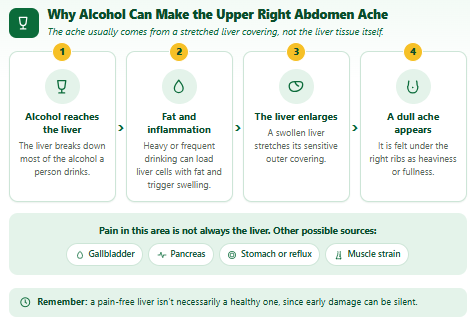
That said, not every ache in this area starts in the liver. Gallstones, pancreatitis, gastritis, ulcers, acid reflux and even a pulled muscle can all cause pain in the same spot, and alcohol can set off or worsen several of them. Early alcohol-related liver damage is also often painless, so a lack of pain offers less reassurance than people expect. Sorting out which of these is responsible is a central part of a liver evaluation, which usually pairs a physical examination with blood tests and imaging.
Quick Note: Pain here doesn’t confirm liver damage, and its absence doesn’t rule it out.
What Other Symptoms May Occur Along With Liver Pain?
Pain related to the liver is not usually experienced alone. Often it is accompanied by nausea, vomiting, loss of appetite, and sleepiness. Symptoms associated with liver problems also progress over time. Thus jaundice, brown urine, hypochromic stools, pruritis, bruising, and abdominal swelling can be observed.

Nausea or vomiting
Often worse after a heavy drinking session.
Alcohol irritates the stomach and a strained liver can add to it; ongoing vomiting needs medical review.

Loss of appetite
An inflamed liver can dull hunger, and eating less can slow recovery.

Ongoing fatigue
When the liver isn’t working well, tiredness can linger even after a full night’s sleep.

Jaundice
Yellow tint to the skin or whites of the eyes.
Bilirubin builds up when the liver can’t clear it, turning the skin and eyes yellow; get seen promptly.

Dark urine, pale stools
Noticeable colour changes can signal liver trouble.
Bilirubin changes can darken urine and lighten stools, which is worth reporting to a doctor.

Belly or leg swelling
Fluid buildup, usually in more advanced disease.
Fluid collects when liver function or blood flow through the liver is impaired.
Several of these characteristics may occur with malfunctions of the gallbladder, pancreas, or the stomach. Consequently, physicians take into account all the aspects, but not only one particular symptom. Also, it is important to bear in mind that at the beginning alcohol-induced liver impairment could also be stealthy. Feeling well doesn’t keep the liver well, which is why the symptoms that appear after the binge drinking are important even if they are mild.
Quick Note: One symptom rarely settles it. Doctors look at the pattern alongside drinking history.
Wondering whether your symptoms point to the liver? Speak with Dr. Ayush Chandra and the team to find out what is behind them.
How Can You Manage or Prevent Liver Pain After Drinking?
The best thing you can do is the easiest thing—drink less, or stop. The safest way for anyone who suffers from recurrent pain is to refrain from drinking alcohol until they have visited their doctor for an evaluation of the liver. The one thing that we should take caution about is, Those who drink excessively on a daily basis should never attempt to quit cold turkey, as withdrawal from alcohol can lead to shaking, confusion or even seizures, and requires medical attention. Daily routines are also beneficial. Meals instead of empty stomachs relieve the strain and drink plenty of water, and it is advisable to consult a doctor or pharmacist before giving pain killers or herbal “liver detox” products as some of these can irritate the stomach or increase the strain on the liver.
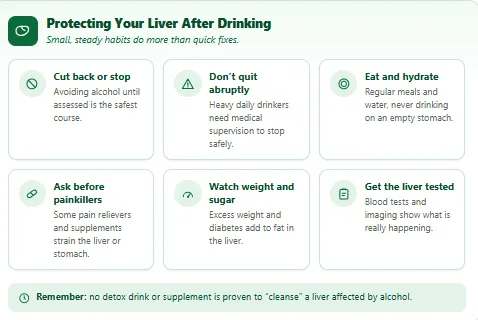
Weight and blood sugar are also something to take into account. Fatty liver is directly related to extra pounds and diabetes, and that is the reason diabetes management usually goes with liver management. From the clinical side of view, for the treatment there can be conducted some tests related to liver functioning as well as performing ultrasound, getting vaccines against hepatitis A and B if recommended, and consulting or engaging in structured support aimed at reducing alcohol consumption.
Quick Note: Painkillers, herbal detox products and supplements aren’t automatically harmless to the liver, so ask first.
When Should You Consult a Doctor for Liver Pain After Drinking?
Pains that arise after drinking and persist over the course of more than a few days, or arise with other symptoms should be investigated rather than ignored. If you drink too much or you have liver diseases, hepatitis, diabetes or fatty liver there is no need to wait.The following conditions that occur cause the pain to urgently require seeing a doctor: unbearable pain, yellowing of skin and eyes, vomiting blood, black stool, confusion or extreme drowsiness, fever with abdominal pain, rapid abdominal swelling, seizures, delirium while going through alcohol withdrawal.
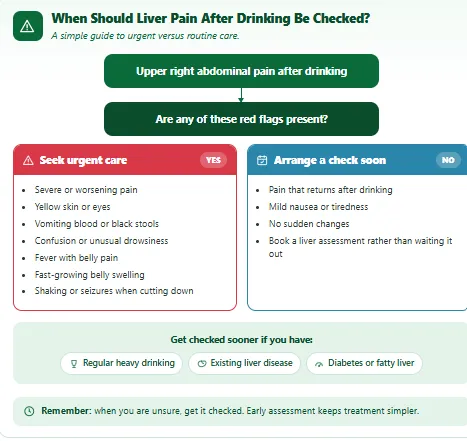
This is no scare story! A large percentage of the alcohol-related liver disease patient can do fairly well with appropriate management (and under some circumstances, that is easily identified). The point is, if you experience symptoms such as these, it’s better to get checked out sooner rather than later, because it can be a treatable problem, and you don’t want it to get to be a big deal.
Want the pain properly assessed instead of guessing at the cause? Arrange a consultation with our team.
Quick Note: Yellow skin or eyes, vomiting blood and confusion need same-day medical care.
Want the pain properly assessed instead of guessing at the cause? Arrange a consultation with our team.
FAQ'S
Why does my liver hurt after drinking even a small amount?
In some cases, the liver is already sensitive, due to its existing fatty liver or inflammation. Sometimes, however, the pain isn’t from the liver, as the gallbladder, pancreas, and stomach may all cause pain in the same region after alcohol. If it still occurs, make sure it is checked.
Does it always hurt when you drink if it causes liver pain?
No. There are several reasons for one uncomfortable morning after a heavy night. It is recurring or persistent pain and questions are raised and only a diagnosis can help to answer whether the liver is part of the problem.
When will liver pain go away after drinking?
It usually depends. A day or two after a hard workout, some pain should go away. Consulting with your physician is proper if it doesn’t go away after several days, returns every now and then or is accompanied by jaundice, vomiting or swelling.
Is it possible to repair the damage caused by alcohol abuse to the liver?
At times, at the beginning. With the cessation of alcohol consumption, the liver may recover its fat and inflammation may resolve as well. Once there is scarring (cirrhosis), it is usually not reversible although alcohol use will stop additional liver damage. How much recovery is possible depends on the stage.
What to do about liver pain after drinking?
It’s better not to self-medicate. Certain pain medications may cause stress on the liver or stomach, especially following alcohol consumption. Always get advice from a doctor or pharmacist before using it.