
Medically Reviewed by Dr. Ayush Chandra, MBBS, Diabetologist & Diabetic Foot Care Specialist
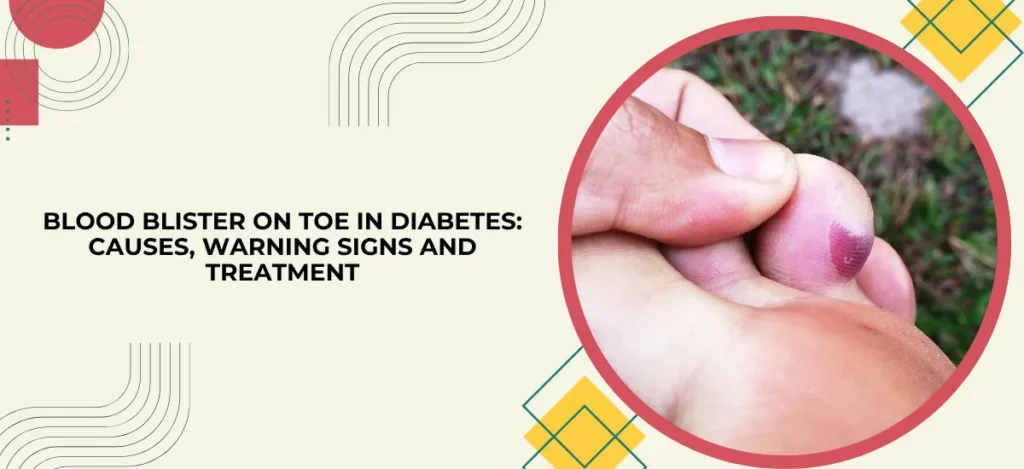
Finding a blood-filled blister on your toe is unsettling on its own. When you’re living with diabetes, the next question is usually “does this matter more for me?” — and the honest answer is: it depends on a few things worth understanding before you decide whether to watch it or get it checked.
As Dr. Ayush Chandra, SCOPE-Certified Obesity Specialist from Ghaziabad says
“A blood blister on its own doesn’t tell us much. What matters is what’s happening underneath — and for that, we need to actually look, not guess from a photo.”
What Causes a Blood Blister on the Toe in People With Diabetes?
A blood blister forms when a small vessel just beneath the skin ruptures from pressure or friction, and blood collects under the surface instead of the usual clear fluid. That’s the main thing separating it from an ordinary blister, which fills with a pale, watery fluid after mild rubbing.
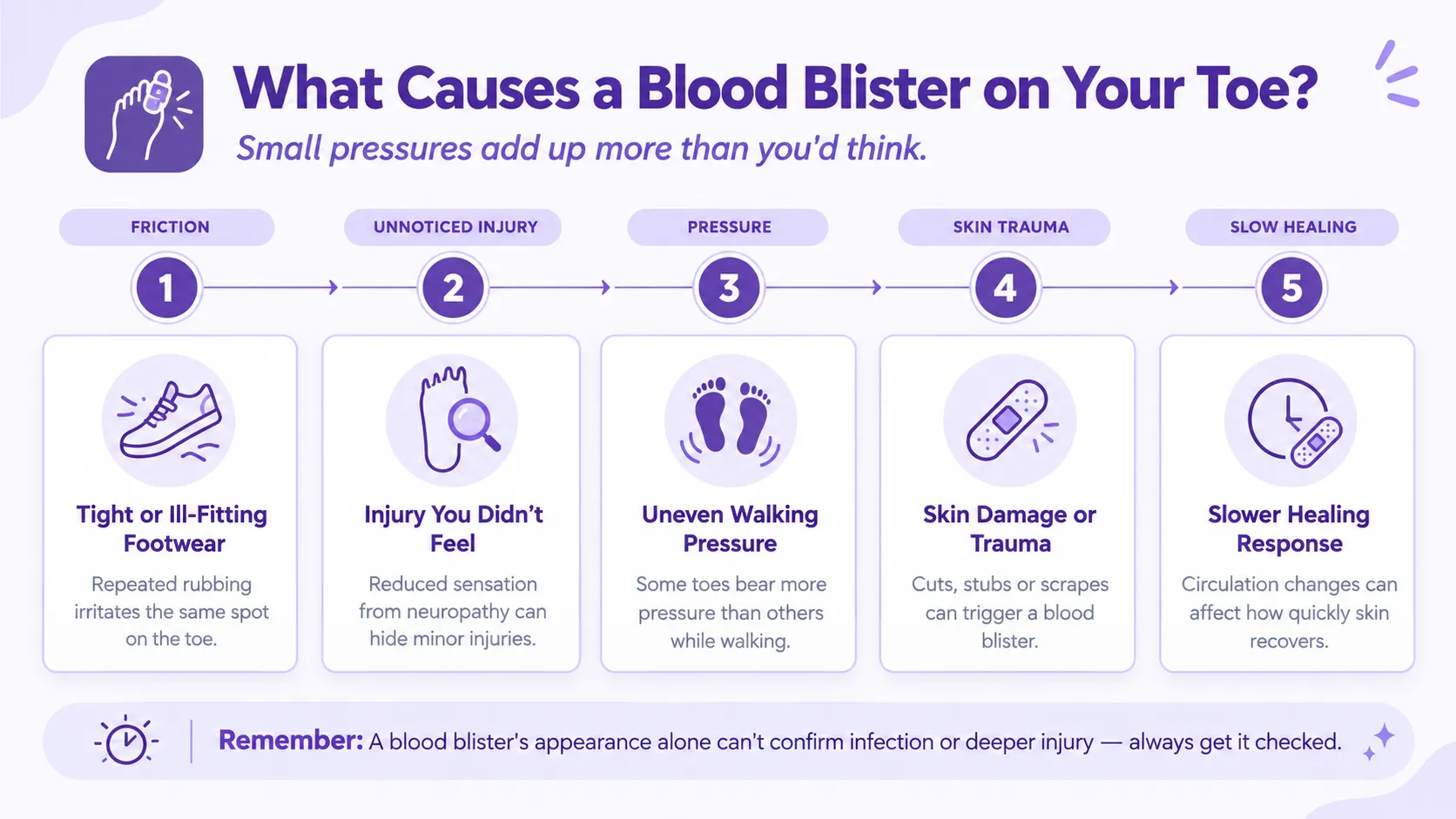
In diabetes, a few everyday things tend to set this off: shoes that rub in one spot, a stubbed toe or small cut that went unnoticed, or simply uneven pressure from how someone walks. Diabetic neuropathy, when present, plays a quiet but real role here — reduced sensation means an injury that would normally cause an immediate reaction can go unnoticed long enough for a blister to form. This kind of nerve-related change is one of the things covered during a standard diabetes checkup since it rarely shows up on its own.
Quick Note: A blood blister on a diabetic toe doesn’t automatically mean infection or a deeper wound — but it also can’t be ruled out just by looking at it. That’s a call for a clinician, not a mirror check.
What Factors Affect How Concerning a Blood Blister Is?
Not every blister carries the same risk. A few things shift where someone lands on that spectrum, and they tend to interact with each other rather than working alone.
Nerve Function
Reduced sensation from neuropathy can hide how serious an injury actually is.
Blood Glucose Control
Steadier glucose levels are generally linked to steadier wound healing.
Footwear Fit
Ongoing friction from ill-fitting shoes can turn a small blister into a bigger problem.
Time to Assessment
How quickly it’s checked often matters more than how it looks on day one.
What Warning Signs Should You Watch for With a Diabetic Toe Blister?
A few changes are worth acting on rather than monitoring quietly. Spreading redness, warmth, or swelling around the blister can point to infection setting in. So can new or worsening pain, pus or unusual discharge, an odd smell, or skin around the area turning pale, dusky, or unusually dark. A low fever or just feeling unwell, a wound that isn’t improving after a few days, blackened or grey-looking skin, and red streaks travelling away from the blister are all reasons to get seen promptly rather than wait it out.
Quick Note: If you have any degree of neuropathy, pain isn’t a reliable warning system — a blister can be quietly worsening even without discomfort. That’s exactly why routine foot checks matter more than they might seem to.
Not sure if what you’re seeing is worth a same-day visit or can wait for a routine appointment? Get in touch and our team can help you figure out which.
How Is a Blood Blister on a Diabetic Toe Treated?
There’s no single fix here — what’s recommended depends on the blister’s size, whether the skin over it is intact, any early signs of infection, and the person’s individual nerve and circulation status.
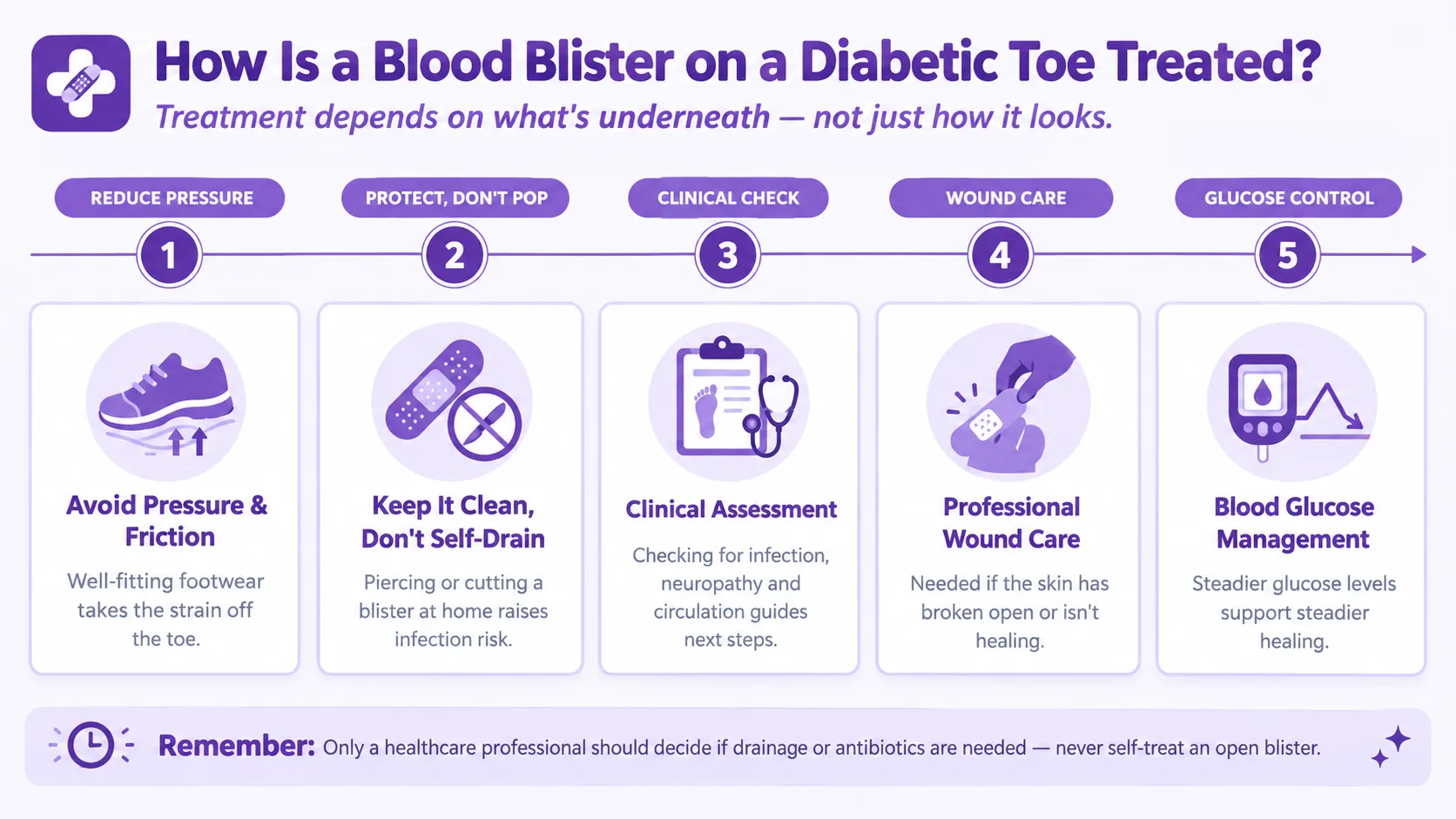
Reducing pressure on the toe usually comes first — properly fitting shoes with enough room can stop a blister from worsening or a new one forming nearby. Keeping the area clean and protected matters too, and this is a good place to be direct: don’t pop, cut, or drain it yourself. Doing so opens a path for infection, particularly in skin that already heals more slowly than average. A clinical check typically covers infection screening, a sensation test for neuropathy, and a look at circulation. If the skin has broken open, professional wound care usually replaces home bandaging. Steadier blood glucose supports the healing process throughout. Antibiotics or other treatments come in only when a clinician decides they’re actually needed — not as a default step. And if there’s any suspicion of deeper infection, poor circulation, or tissue damage, referral for further evaluation is the safer next step, not something to defer.
Quick Note: Whether a blister needs to be drained at all, and how, is a clinical decision — not a home judgment call, even if it looks straightforward.
When Should You See a Doctor for a Blood Blister on a Diabetic Toe?
As a general rule, a new blood blister is worth having checked reasonably soon — not indefinitely monitored particularly if there’s existing neuropathy, reduced circulation, or a history of foot ulcers or infections.
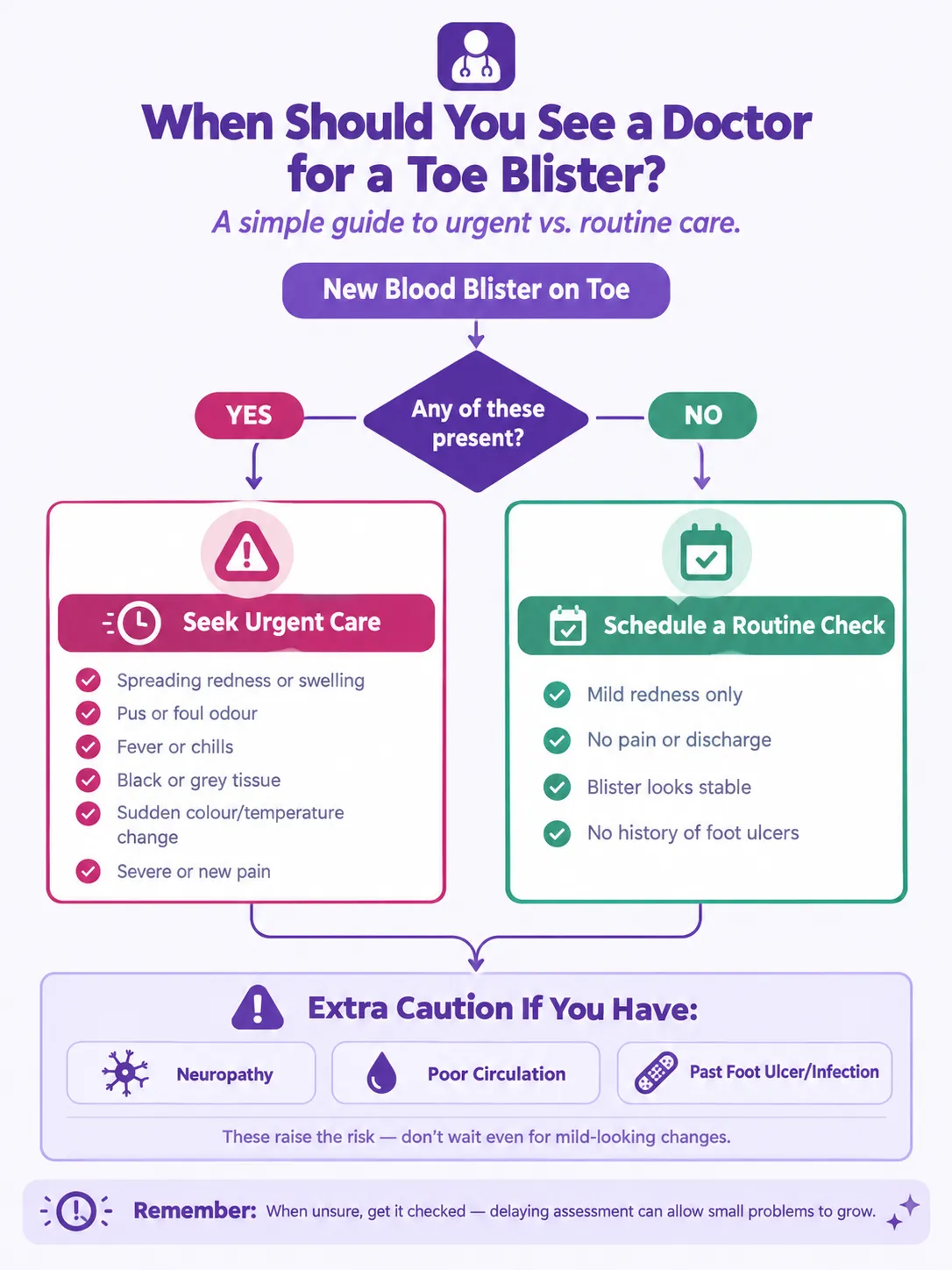
Some signs call for urgent rather than routine care: visible infection, swelling or redness that’s increasing quickly, pain that appears suddenly or worsens, fever or chills, pus or a foul smell, black or grey tissue, a wound that’s deep or open, or any sudden change in the colour or temperature of the foot. A blister that’s clearly getting worse instead of settling belongs in this category too.
This isn’t meant to alarm — most blisters resolve without incident. But delaying assessment when these signs show up can let a small problem grow, and catching things early generally keeps treatment simpler.
Quick Note: If in doubt, it’s reasonable to describe what you’re seeing to a clinician rather than guess at how serious it is on your own.
Want your foot checked properly rather than guessing from what it looks like today? Book a consultation with our diabetic foot care team.
FAQ'S
Is a blood blister on the toe always serious in diabetes?
Not always. Many heal without complication, especially with good glucose control and no nerve or circulation issues — but it’s still worth having checked if there’s any uncertainty.
Can I pop a blood blister on my toe myself?
No. Piercing or draining it at home isn’t recommended, since it raises infection risk. Let a clinician decide if drainage is actually needed.
Why might I not feel pain from a blister if I have diabetes?
Diabetic neuropathy can reduce sensation in the feet, so an injury may cause little or no pain even while it still needs attention.
How can I tell if a diabetic toe blister is infected?
Watch for increasing redness, warmth, swelling, pus, odour, spreading redness, or fever — these point to infection and are worth prompt evaluation.
Will every blood blister turn into a diabetic foot ulcer?
No. That depends on factors like blood glucose control, nerve function, circulation, footwear, and how quickly it’s assessed — not on the blister by itself.